Properties situated near wooded corridors in Bramlett Forest, mature tree canopies in Chandler Woods, and creekside terrain along Pew Creek face elevated parasite pressure from suburban wildlife carriers like…
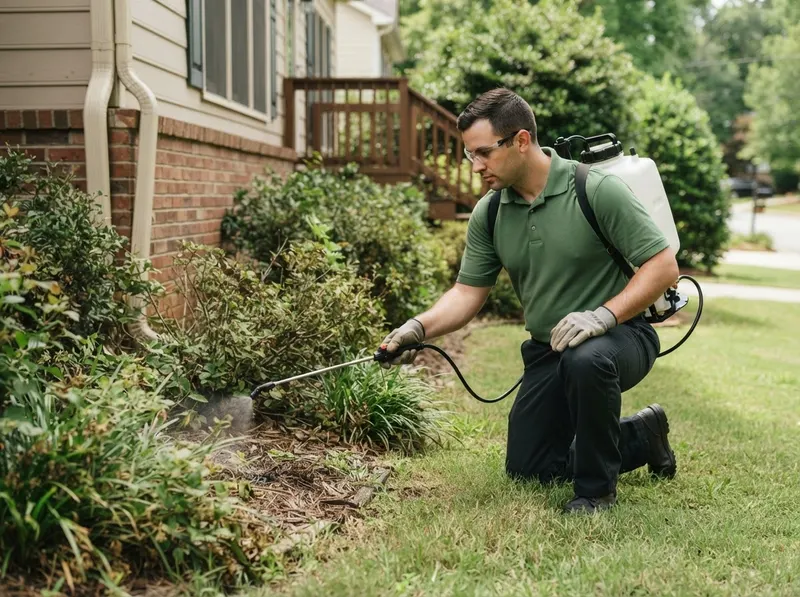
Properties situated near wooded corridors in Bramlett Forest, mature tree canopies in Chandler Woods, and creekside terrain along Pew Creek face elevated parasite pressure from suburban wildlife carriers like white-tailed deer, raccoons, and feral cats. A standard general pest service simply sprays foundation perimeters, which misses larval clusters embedded deep within shaded Bermuda thatch or moist pine straw beds near Freeman's Mill Park. Dedicated flea and tick suppression combines an adulticide with an insect growth regulator (IGR) that binds directly to soil organic matter. This halts juvenile development for up to 60 days without bathing the entire lawn in indiscriminate chemical volume.
Selecting the correct intervention level depends on whether the infestation has breached the home envelope. For exterior-only detection where dogs run fenced turf in River Oak Village or Woodhaven, a dual-layer yard program fits best. This treats the property boundary, low-hanging shrub branches up to 3 feet high, and deck perimeters where ticks stage questing behavior on grass tips. When indoor pet scratching reveals salt-and-pepper flea dirt on carpets or pet bedding in Abington Green or Castlegate, an integrated interior protocol is required. Interior treatment involves sweeping micro-targeted applications along structural baseboard edges, rug fibers, and sub-cushion furniture voids to neutralize hidden cocooned pupae.
The strategic trade-off centers on application frequency versus seasonal dormancy. A single rescue application terminates an active mid-summer flare-up, but it leaves properties exposed to re-infestation 4 to 6 weeks later when neighborhood fauna transit untreated property borders. A three-season suppression program spanning April through October continuously buffers suburban lots against questing arachnids. Treatments become rainfast within 2 to 3 hours of dry application time, remaining completely inert to children and family pets once dried, and they avoid requiring locking multi-year service agreements.
Every job gets a firm, written price after a free on-site visit.
Tell us about your flea and tick control job in Lawrenceville and we'll send a clear, written quote, usually the same day.
 Peachwood Pest Control