Exterior barrier treatment secures the outside foundation zone of suburban residential properties, creating an impassable perimeter that neutralizes active invaders at ground level. In wooded Lawrenceville subdivisions…
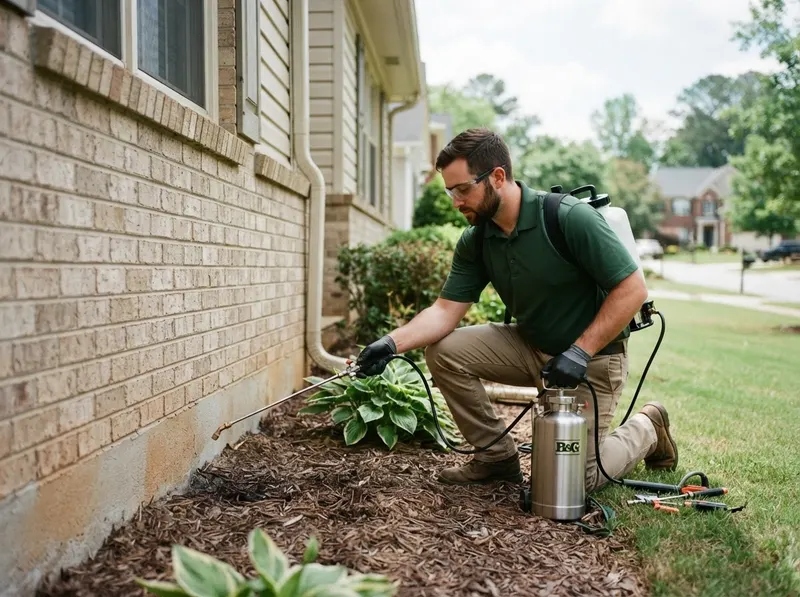
Exterior barrier treatment secures the outside foundation zone of suburban residential properties, creating an impassable perimeter that neutralizes active invaders at ground level. In wooded Lawrenceville subdivisions such as Bramlett Forest, Huntington, and Castlegate, saturated red clay soil and heavy pine straw landscaping provide prime harborage for invasive Argentine ants and destructive roaches. Applying targeted non-staining microencapsulated barriers 3 feet up the masonry foundation and 5 feet out onto adjacent soil halts subterranean trails. This protective perimeter stops nesting colonies before pests access window sills, weep holes, or utility line penetrations.
Selecting standalone exterior treatment serves homes dealing with perimeter pest migration without interior nesting, whereas severe existing attic infestations require supplemental structural exclusion. The fundamental trade-off balances chemical impact with site control: treating the exterior perimeter eliminates interior pesticide vapor and minimizes indoor family disruption, though it cannot clear rodent nests already established inside insulated drywall voids. Properties adjacent to wetlands or natural runoff pathways like Pew Creek or the woods flanking Rhodes Jordan Park benefit significantly from water-insoluble formulations that resist Georgia rainstorms and high summer heat.
Homeowners in established areas like River Oak Village, Woodhaven, and Chandler Woods often encounter perimeter breaches through foundation soil subsidence near plumbing lines. Perimeter barriers adhere securely around air conditioning conduits, hose bibbs, and basement slab joints, denying entry across vulnerable transit corridors. Step 1 involves sweeping spider webs, wasp nests, and plant debris from low fascia boards and foundation corners. Step 2 applies water-resistant microencapsulated liquid treatments along the brick veneer or concrete slab base. Step 3 deposits targeted botanical or synthetic granules into adjacent mulched shrubbery to establish a 60-to-90-day protective perimeter band.
Every job gets a firm, written price after a free on-site visit.
Tell us about your exterior barrier treatment job in Lawrenceville and we'll send a clear, written quote, usually the same day.
 Peachwood Pest Control